
From Data to Impact
GPS transforms data into actionable insights through two main components:

Data Analytics Engine
- Integrated Data: Connects previously siloed data from multiple systems (such as Student Information Systems (SIS), assessment platforms, and financial systems).
- Consistent Data: Utilizes industry Ed-Fi standards for seamless integration, ensuring accurate and timely data exchange.
- Security and Local Control: Grants districts their own Operational Data Store (ODS) for secure data access and local governance while contributing to statewide insights.

Visualization and Reporting Platform
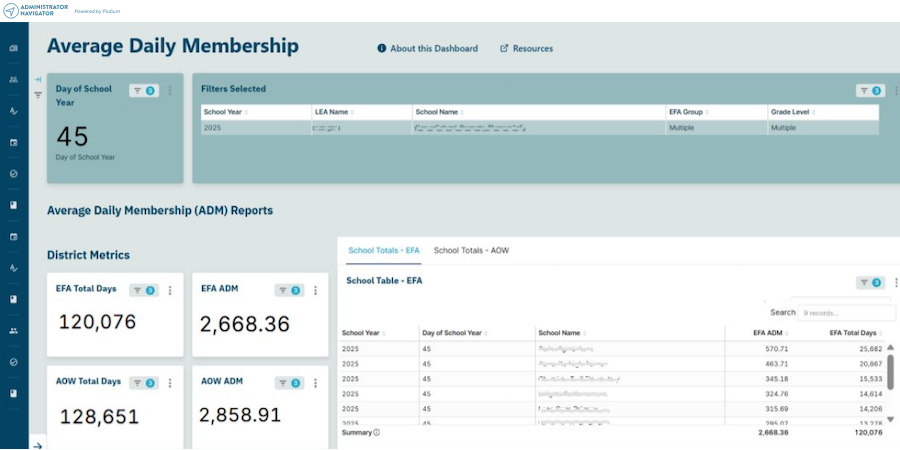
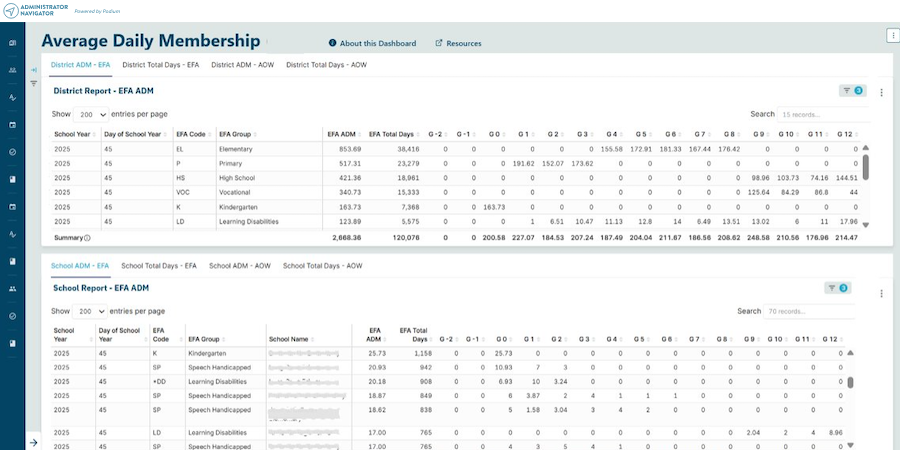
- Administrator Navigator: Supports strategic planning and accountability for superintendents and principals, featuring metrics on student performance, attendance, educator workforce data, and more.
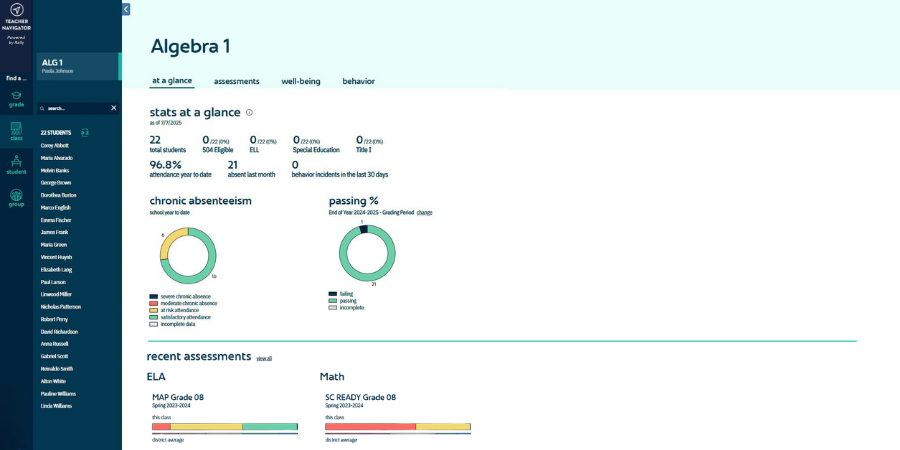
- Teacher Navigator: Provides classroom-level insights with student profile cards, real-time alerts, and assessment dashboards, enhancing instructional planning and intervention.
GPS In Action
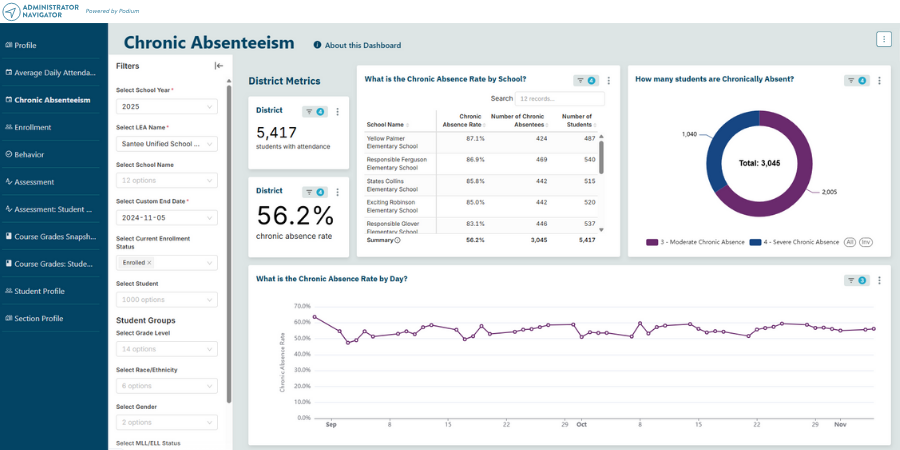
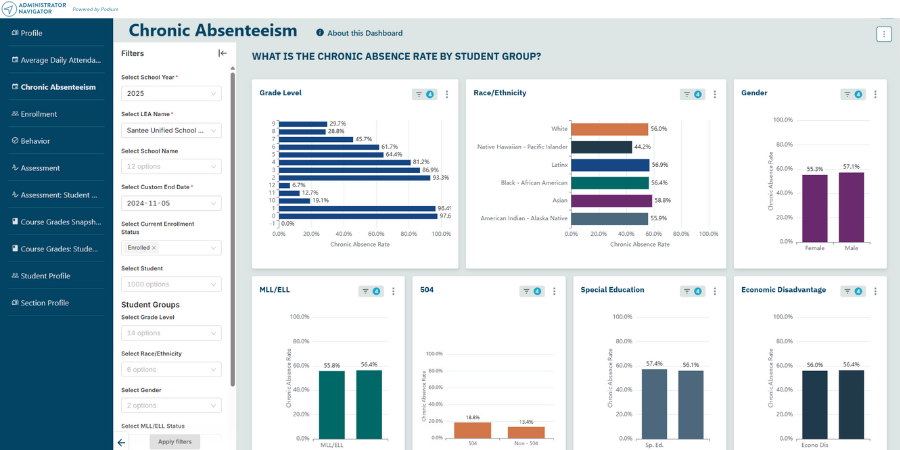
Identifying Chronic Absenteeism
Early identification of trends can mitigate long-term effects of poor attendance.EX: A principal uses GPS to view their students' attendance records, identifying trends in absenteeism that require administrative intervention. This proactive approach ensures timely support for students, fostering academic success.
Skill Analysis and Differentiation
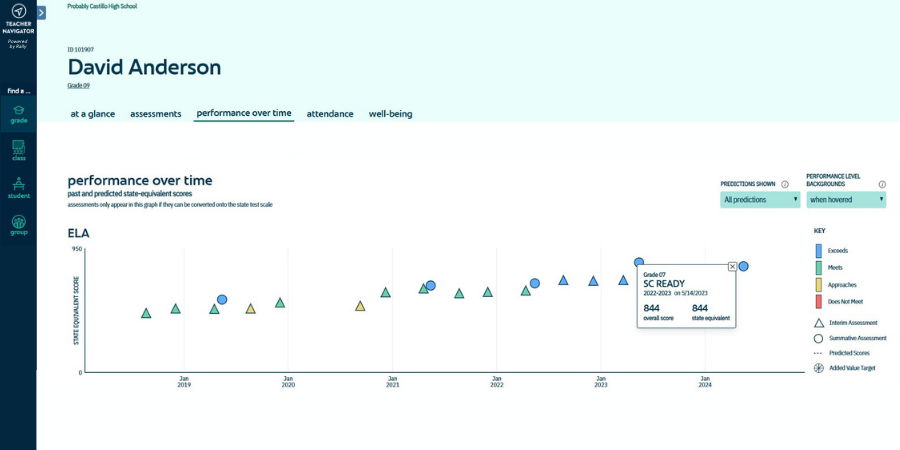
Student-level and class-level data enable teachers to tailor small group instruction based on demonstrated academic needs.
EX: A teacher analyzes student performance on formative assessments through GPS. By identifying strengths and weaknesses in different competencies, they are able to customize instruction to better meet each student's needs, improving overall class performance.
Recovering Funding Through Accuracy
Data visualization capabilities help administrators quickly identify financial trends and effectively deploy resources for student support.EX: A school district utilizes GPS to verify student data uploads essential for securing funding. By identifying an issue with their fourth-grade data submission, they were able to recover $150,000 in funding critical for student support.
What They're Saying
Learn More about GPS
GPS Introduction
Overview
GPS Teacher
Navigator
GPS Administrator
Navigator


Have any questions, or want to learn more about GPS? Contact research@ed.sc.gov.

The examples above are drawn from real-life situations.
Names of educators, students, and districts have been changed to ensure privacy.